



We’ll need to dig into the footnotes to find out what the contra accounts are. Contra liabilities are common in companies that sell bonds to raise capital. For example, a bond with a principal amount of $1,000 may be sold for only $950. The bond is listed on the balance sheet at the full amount of $1,000, but the cash received is just $950, so a contra liability for the discount is listed to make the entry balance. Accumulated depreciation is the total of all depreciation that has been charged to existing fixed assets such as equipment and buildings. There can be hidden value in stocks that have a lot of fully depreciated buildings.

Discount on Bonds Payable

There is the existence of contra accounts in accounting which are accounts that have the purpose of decreasing the value of another specific account if the two accounts are netted or summed together. Home Depot reports that returns are estimated at the time of the sale based on historic returns numbers. The amount is not reported, and the net sales amount is reported on the income statement. Consider a business that offers an early payment discount to its customers, cutting their invoiced total by 3% if they pay within 1 week of invoicing. If every single buyer had taken advantage of the early payment discount, the company would have provided roughly $10 thousand in discounts during that same timeframe.

Contra Liability Account
- A contra asset account is a type of account in accounting that has a natural credit balance and is used to decrease the balance of a related asset account.
- From studying the basics of debit and credit, balance sheet accounts have a healthy balance.
- To keep a finger on the pulse of your contra accounts, you might also consider dashboards and reporting tools that offer real-time insights into these critical financial metrics.
- Generally speaking, the use of contra accounts is to ensure their related accounts stay clean and to keep track of historical cost easier.
- The purpose of this account is to reduce the carrying value of the asset on the balance sheet.
- The contra liability account would be used to offset the liability account on the balance sheet.
To convert your invoice management efforts to an electronic format that can easily share data with other financial systems, businesses can leverage Invoiced’s E-invoice Network. In its general ledger, the business will want to capture its gross sales figures and the actual value of the discount. To properly account for this scenario in their books, the company must record the gross sales figure (which is the total sales revenue) and the value of the discount on early payments. Since these values are different in nature, the company must put them into two separate accounts. The Gross Sales account, which records the total sales revenue, would be paired with the Sales Discount account, which serves as the contra account for the Gross Sales account. Moreover, businesses can avoid the harsh lights of compliance issues and investor skepticism with a clean, transparent ledger.
Is a Contra Account a Debit or Credit?
- Whereas assets normally have positive debit balances, contra assets, though still reported along with other assets, have an opposite type of natural balance.
- Still, it is important when possible to consider how the net accounts are calculated and be wary of companies that are reporting a ton of bad debts.
- Treasury stock is a common contra equity account, representing shares repurchased from shareholders.
- It is a reduction from equity because it represents the amount paid by a corporation to buy back its stock.
- When a customer makes a payment, the amount is credited to the accounts receivable account and debited to the cash account.
Contra Asset Account – A contra asset account is an asset that carries a credit balance and is used to decrease the balance of another asset on the balance. Contra revenue accounts are used to offset the balance in a revenue account. For example, if a company has a revenue account for sales returns and allowances, they would also have a contra Bookstime revenue account to offset the balance in the sales returns and allowances account.
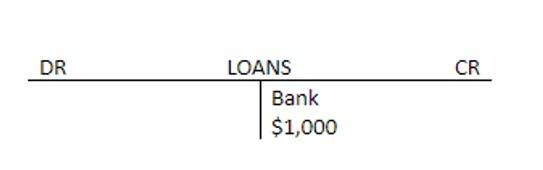
Examples of contra liabilities are Discounts on Bonds and Notes Payable and Short-Term Portion of Long-Term Debt. Revenue is an income statement account, but it flows through to the equity section of retained earnings as well. contra revenue account Any products that are sold at a discount or returns are deducted from gross revenue to produce net revenue as the top line on the income statement. This means that entries recorded on the left side of the T-account will increase the asset balance and entries recorded on the right side will decrease it. Contra asset accounts have a balance that is opposite from the regular asset accounts.
The company estimates that it will not be able to collect 1,000 from its customers. The allowance for doubtful accounts is a contra asset account that is used to offset Accounts Receivable on the balance sheet. Accountants use contra accounts rather than reduce the value of the original account directly to keep financial accounting records clean. If a contra account is not used, it can be difficult to determine historical costs, which can make tax preparation more difficult and time-consuming.

One common example of a contra account is the allowance for doubtful accounts. This account is used to reduce the balance of accounts receivable to reflect the amount that is unlikely to be collected. Another example is the contra inventory account, which is used to write down or collect obsolete inventory. Contra accounts are an essential part of accounting that are often misunderstood or overlooked. A contra account is a type of account that is used to offset the balance of another account. Revenue is shown on the income statement as a credit, it is the amount of revenue a business earns in a period.
- In accounting, a contra account is a general ledger account that offsets the balance of another general ledger account.
- In this article, we embark on a journey to unravel the significance of Contra Journal entries, explore their various types, and shed light on how they can revolutionize businesses.
- A contra equity account is an account that is used to offset another equity account on the balance sheet.
- As mentioned, there can be a contra account for any type of transaction depending on a company’s needs.
- A common example is the discount on bonds payable, representing the difference between a bond’s face value and its issuance price when sold at a discount.
Contra Assets Account Example
There are four primary types of Journal entries, each catering to specific scenarios and serving as essential tools for maintaining financial accuracy. However, that $1.4 billion is used to reduce the balance of gross accounts receivable. Therefore, contra accounts, though they represent a positive amount, are used to net reduce a gross amount.
Whether used to offset asset values, liabilities, or revenues, contra accounts play a crucial role in maintaining transparency and compliance with accounting standards. Understanding their purpose, types, and application is fundamental for accounting professionals and learners alike to ensure accurate financial reporting and informed decision-making within organizations. Contra equity reduces the total number of outstanding shares on the balance sheet. retained earnings The key example of a contra equity account is Treasury stock, which represents the amount paid to buyback stock. The equity section of the balance sheet is where the shareholder’s claims to assets are reported.