



Debtors, on the other hand, are invoices that are past their due date and still outstanding. Finance Strategists has an advertising relationship with some of the companies included on this website. We may earn a commission when you click on a link or make a purchase through the links on our site. All of our content is based on objective analysis, and the opinions are our own. Amortization allows a company to take that portion of an uncollectible account that is deemed to be impaired and account for it as though it were a sale of goods or services. This approach is acceptable for these receivables because non-collection is generally less frequent and thus not as easily anticipated.
Refine Collection Efficiency
A low DSO is always preferred, but the business might be losing out on potential customers due to stringent credit terms if the DSO is too low. On the contrary, a high DSO means poor cash flow and low working capital. Bill receivables are a formal agreement between a customer and the business agreeing to pay a certain amount within a particular period for the goods or services they receive.
Trade Receivables Example
More specifically, it estimates the percentage of trade receivables that a business expects to be uncollectible. Then, in case there’s a bad debt expense that a client refuses to pay, cash is taken out of this allowance. Most B2B businesses offer goods and services to customers on credit. Trade receivables is the amount that customers owe to a business when buying a product or service on credit. It is a key line item in the balance sheet and is listed under the current assets section due to its short conversion time into cash.
Accounts receivable formula and ratios
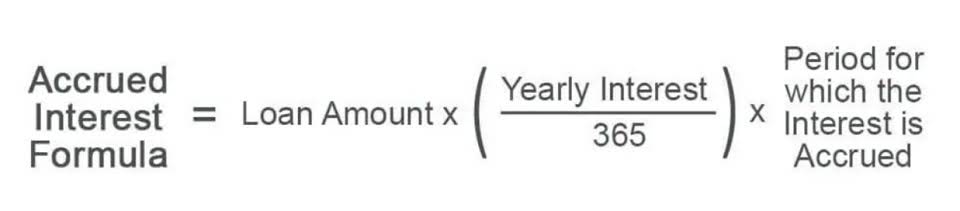
Accounts receivable, or receivables, can be considered a line of credit extended by a company and normally have terms that require payments be made within a certain period of time. Depending on the agreement between company and client, the payment might be due in anywhere from a few days to 30 days, 60 days, 90 days, or, in some cases, up to a year. At some point along the way, interest on the debt might also begin to accrue. Accounts receivable represents money that a business is owed by its clients, often in the form of unpaid invoices.
- In other cases, businesses routinely offer all of their clients the ability to pay within some reasonable period after receiving the products or services.
- This reduced price is the starting point for the accounting treatment, and the list price is not recorded by either party.
- “Receivable” refers to fact that the business has earned the money because it has delivered a product or service but is, at that point in time, still waiting to receive the client’s payment.
- So, when the customer is fully satisfied, it indicates there is a smooth and good payment process.
The longer you wait, the longer payment is likely to be delayed, meaning that trade receivables stay stuck on your balance sheet. GoCardless makes it easier and faster for your customers to pay you by giving you the option to collect recurring payments via Direct Debit. The accounts receivable aging report breaks down your outstanding invoices by how old they are. To create this report, you’ll group https://x.com/BooksTimeInc your accounts receivable balances by the age of each invoice. This ratio tells you how many times you’re collecting your average accounts receivable balance. A higher ratio means that a company is collecting its receivables more quickly, which is a good thing.
Trade receivables are part of doing business
- Also, trade receivables are accounted for under current assets, whereas account payables are classified as current liabilities.
- Also known as accounts receivable, trade receivables are classified as current assets on the balance sheet.
- There are a few big advantages to managing your accounts receivable effectively.
- It means that if the ART rate is high, your company is rapidly getting on-time payments with no delay.
- Ingrid has now reviewed her other trade receivables and determined that, although it is not certain, there are doubts about the recoverability of $16,254 worth of trade receivables.
Often a company will take a week or two (or longer) https://www.bookstime.com/articles/operating-cycle to get an invoice out after its product has been delivered or it has finished providing a service. When invoicing is delayed, payment is delayed, meaning the company can’t use those funds for something else. Remember that offering credit terms to your customers is important. Unfortunately, even with careful planning, some of those accounts will end up delinquent no matter how careful you are. If appropriate, the receivable should be clearly identified and listed on the balance sheet.

Would you prefer to work with a financial professional remotely or in-person?

So, company A can use trade receivables financing to raise funds and fulfill the order. The average collection period is a measure that indicates how long, on average, it takes a company to receive payment after making a sale. It would also be acceptable to maintain a separate ‘irrecoverable debts recovered’ account so as not to obscure the irrecoverable debts recorded in the period. The irrecoverable trade account receivable debts expense might be referred to as a ‘bad debts expense’, ‘receivables expense’, or similar.
In simple words, this is unpaid money due from the client’s end after availing of the service or buying the product. PwC refers to the US member firm or one of its subsidiaries or affiliates, and may sometimes refer to the PwC network. This content is for general information purposes only, and should not be used as a substitute for consultation with professional advisors. Implementing Early Payment Incentive and Late Payment FeesTo prompt buyers to pay on time, a seller can provide incentives for early payments. However, if a buyer is late in their payment, the seller should impose late payment charges. Implementing both options should be an incentive for the buyers to pay early or on time.